



When the police officer asked whether I really wanted the entire kitchen camera recording played in front of everyone, my mother-in-law, Leena, stopped shouting for the first time that evening.
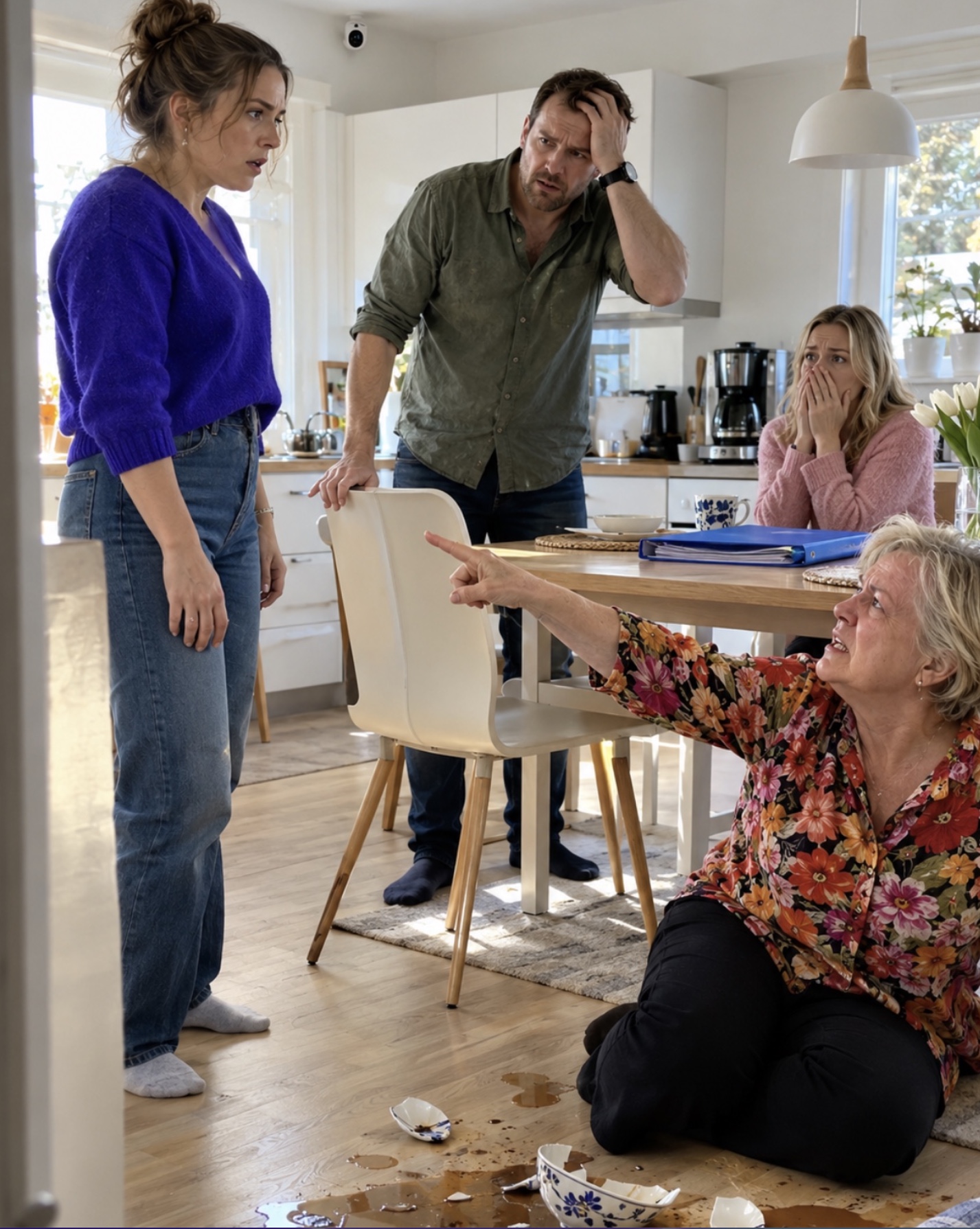
She was standing by the kitchen doorway, pressing the back of her hand against her flushed cheek, even though no one had hit her in the face. One button on her cardigan had come loose and was hanging by a thread. On the floor lay the shattered pieces of a Marimekko bowl my own mother had given me as a housewarming gift eight years earlier.
My husband, Antti, stood in the middle of the kitchen, pale.
His sister, Sanna, was gripping her phone.
And I had just said: “Play all of it. Not just the part Leena wants you to see. Start at least fifteen minutes before I came inside.”
Leena’s expression changed so quickly that I noticed it before anyone else did.
“There’s no need for that,” she said. “The police only need to see the actual incident.”
The older officer looked at me, then at Leena.
“If the camera recorded the sequence of events, it’s generally better to review a sufficient period leading up to the incident.”
Leena immediately started saying something about privacy.
That was when I knew for certain that I had been right.
It had all started only two hours earlier, when I was coming home from work.
Antti and I lived in a terraced house in Tampere, in a quiet neighborhood just outside the city center. We had bought the place together six years earlier.
Antti worked as a civil engineer. I was a medical laboratory technician at a hospital.
We had two children: Elias, nine, and Aino, six.
Leena lived in Kangasala, about a twenty-minute drive away.
She wasn’t the kind of mother-in-law who showed up at our door every day.
That might actually have been easier.
Leena came less often, but whenever she did, it was usually because she had something to discuss that she had already decided on everyone else’s behalf.
That Thursday, Antti called me shortly before four.
“Mom’s coming over,” he said.
“Why?”
There was a slight pause.
“Sanna has problems.”
It was a sentence I had heard far too many times over the previous five years.
Sanna’s car had broken down.
Sanna’s rent was too high.
Sanna needed money for a rental deposit.
Sanna’s ex-husband hadn’t paid on time.
Sanna wanted to move.
Sanna needed help with childcare.
Somehow, every problem eventually ended up on Antti’s table.
“What kind of problems?” I asked.
“Money stuff. We’ll talk at home.”
I could already tell from his voice that Antti knew I wasn’t going to like it.
After work, I stopped at the Prisma supermarket in Kaleva. I bought milk, rye bread, salmon, and the yogurt the children liked.
I was at the checkout when Sanna sent me a message.
“Can you get home quickly? Mom’s getting worked up.”
That stopped me.
Sanna almost never warned me about her mother.
I simply replied:
“On my way.”
When I pulled into our driveway, I saw Leena’s dark blue Toyota.
Sanna’s car was parked behind it.
The kitchen light was on.
I didn’t go inside immediately.
I carried the groceries around to the storage area first because one of the milk cartons had leaked slightly. I wiped the bag with paper towels, changed my damp glove, and answered a message from Elias at the same time.
He and Aino were at the neighbors’ house because Antti had asked them to go there for a little while.
It took me maybe seven or eight minutes.
When I finally opened the front door, I heard Leena’s voice coming from the kitchen.
“You just have to get her to sign it.”
Then silence.
When I stepped into the kitchen, all three of them turned toward me.
“What exactly am I supposed to sign?” I asked.
Leena smiled much too quickly.
“Nothing. We were discussing Sanna’s situation.”
There was coffee on the kitchen table, cinnamon buns, and a blue document folder.
I looked at Antti.
“What’s that?”
He lowered his eyes.
Sanna stood up.
“I’m leaving soon,” she said.
“No one is leaving until somebody tells me what’s going on.”
Leena sighed as though I were a difficult child.
“You always turn everything into a drama.”
I took off my coat.
“What am I supposed to sign?”
Antti opened his mouth.
Leena answered first.
“Sanna’s bank needs additional collateral.”
I looked at Sanna.
Her face was bright red.
“How much?”
“Forty thousand euros,” she said quietly.
For a second, I thought I had misheard.
“What?”
Sanna was planning to buy an apartment with her new boyfriend, Juha. I knew about that. I had even congratulated them.
What I hadn’t known was how fragile their financing apparently was.
“The bank would approve the loan if they had additional collateral,” Leena explained. “Antti’s share of this house could be enough.”
I stared at her.
“Antti’s share?”
“Yes.”
“This is our family home.”
“Nobody is taking your home away.”
“Then why do I need to sign anything?”
Leena leaned back.
“Because you’re Antti’s wife.”
“That doesn’t answer my question.”
Antti got up from the table.
“Emilia, calm down.”
That was a mistake.
Those were the last words I wanted to hear at that moment.
“I am perfectly calm. Show me the papers.”
Antti pushed the folder toward me.
The bank’s name was printed across the top of the first page.
The next page outlined a preliminary collateral arrangement involving our home.
I wasn’t a lawyer.
But I could read.
If Sanna and Juha failed to meet their obligations, the arrangement could ultimately affect assets tied to our home.
“No,” I said.
Leena slapped her palm against the table.
“What do you mean, no?”
“I mean no.”
“This house belongs to Antti too.”
“Yes, it does. But our family home is not going to secure Sanna’s mortgage.”
Sanna stood up.
“I already told Mom we don’t have to do this.”
Leena turned sharply toward her.
“Be quiet.”
Sanna stared at her mother.
“Mom, this is my loan.”
“And I’m trying to help you!”
Then Antti said something I hadn’t expected.
“I promised Mom yesterday that I’d ask Emilia.”
I turned toward him.
“Did you?”
He didn’t answer.
“Antti. Did you ask me?”
“Not yet.”
“But the papers are already here.”
Leena stood up.
“Because we knew you’d make a big issue out of it.”
Something inside me went cold.
I wasn’t angry anymore.
It was worse than anger.
“So you already decided everything and thought you’d simply get me to sign.”
“Nobody is forcing you.”
“Five minutes ago, I heard someone say, ‘You just have to get her to sign it.’”
Leena froze.
Antti looked at his mother.
Sanna pressed her lips together.
“You heard wrong,” Leena said.
“No, I didn’t.”
“Emilia, you were only just coming inside.”
“I was in the storage area.”
Unease flashed across Leena’s face.
Only for a second.
Then she pointed at me.
“You’ve always tried to separate Antti from his family.”
I gave one short laugh.
“This isn’t about family. This is about forty thousand euros and our home.”
“Emilia’s right,” Sanna said.
Everyone went silent.
Leena looked at her daughter as if she had betrayed her.
“What did you say?”
“I said she’s right. I never wanted to ask them for this.”
“But Juha said—”
“Juha doesn’t even know about this!”
That was the next surprise.
Antti turned toward his sister.
“What?”
Sanna suddenly looked as though she would rather be anywhere else.
“Mom contacted the bank on my behalf.”
“How?” I asked.
“She knows someone who works there. She asked him about possible arrangements.”
Leena immediately talked over her.
“I was only looking into the options.”
“In my name,” Sanna said. “Without asking me.”
Antti closed his eyes for a moment.
Then Leena’s phone vibrated on the table.
A message appeared on the screen.
Leena grabbed the phone immediately, but I had already seen the sender’s name.
Markku.
I didn’t know who Markku was.
Sanna did.
“Is that the man from the bank?”
Leena didn’t answer.
“Mom?”
“That’s none of your business.”
Sanna held out her hand.
“Show me the message.”
“Absolutely not.”
Sanna grabbed the phone.
Leena pulled it back.
And in that instant, the situation went from ridiculous to dangerous.
They both pulled at the phone.
“Let go!” Leena shouted.
“Give it to me!”
Antti stepped between them.
I tried to move the blue folder away from the table before the papers ended up soaked in coffee.
Leena yanked the phone back hard and stumbled.
Her elbow hit the bowl.
It fell to the floor and shattered.
Sanna stepped over the broken pieces and reached for the phone again.
Leena shoved her.
Sanna shoved back.
“Stop!” I shouted.
Antti grabbed Sanna’s arm.
Leena raised her hand again.
I moved between them.
The next few seconds were chaos.
Someone’s hand hit my shoulder.
A coffee cup tipped over.
A chair fell sideways.
Sanna cried out when her shoe came down on a shard of the broken bowl.
And Leena ended up sitting on the floor.
She hadn’t fallen hard.
But the second she realized she was on the floor, her expression changed.
“You pushed me!”
She was staring directly at me.
“What?”
“You pushed me onto the floor.”
“I didn’t touch you.”
“I’m calling the police.”
Antti stepped forward.
“Mom, don’t—”
But Leena already had her phone.
“I have proof.”
Then she looked toward the upper corner of the kitchen.
I remembered the camera.
We had installed a small indoor camera three months earlier because Elias sometimes came home from school before us, and we wanted to know when the children arrived.
The camera covered the hallway and part of the kitchen.
We had planned to remove it once our new video doorbell arrived.
Leena knew it was there.
And now she smiled.
“The camera will show everything.”
Ten minutes later, two police officers were standing in our kitchen.
Leena told her version first.
According to her, I had come home aggressive, started shouting about money, and deliberately pushed her.
Sanna interrupted twice.
Antti said he hadn’t clearly seen who had touched whom.
I let Leena finish.
Then the older officer asked about the camera.
Leena pointed toward it.
“I’m sure it recorded what she did.”
I looked at Antti.
He had the login details for the camera app on his phone.
“Show them the recording,” I said.
Leena nodded, satisfied.
Then I added:
“But start fifteen minutes before I came inside.”
That was when her face changed.
Antti opened the app.
The recording appeared on his phone, but the officer asked him to cast it to the television in the living room so everyone could see it clearly.
The first few minutes were ordinary.
Leena drank coffee.
Sanna sat at the table.
Antti looked through the documents.
Then, on the recording, Leena pushed the folder toward Antti.
The audio was perfectly clear.
“Emilia won’t agree if you ask her directly.”
Antti answered:
“I’m not going to trick her.”
Leena shook her head.
“Nobody is tricking anyone. Just tell her it’s a formality.”
I felt Antti stiffen beside me.
On the recording, Sanna said:
“Mom, stop. I don’t want their home used as collateral.”
Leena replied:
“You don’t understand these things.”
Then came the sentence I had heard from the storage area.
“Antti, you just have to get her to sign it. After that, the bank will handle the rest.”
The police officer said nothing.
But the recording continued.
And then came something even I hadn’t known about.
Sanna asked:
“What if Emilia reads the documents carefully?”
Leena laughed.
“Then we’ll say this version is outdated.”
Antti stood up in the recording.
“What version?”
Leena pulled another document out of her bag.
“This is the simpler one.”
In the living room, beside me, Antti whispered:
“What the hell?”
On the recording, Leena pushed the paper toward him.
“This one doesn’t explain the consequences of the collateral in so much detail.”
“Where did you get this?” Antti asked.
Leena didn’t answer.
Sanna said:
“From Markku?”
Several seconds of silence followed.
Then Leena replied:
“He only helped with the wording.”
The officer paused the video.
“Who is Markku?”
Leena remained silent.
Sanna answered for her.
“Markku Hietanen. He works at the bank.”
The older officer wrote the name down.
Leena started insisting that the conversation was being taken out of context.
But the recording wasn’t finished.
Antti pressed play.
When I appeared in the kitchen, everything happened almost exactly as I remembered.
I never touched Leena first.
When Sanna and Leena struggled over the phone, Leena shoved Sanna.
Sanna stumbled toward me.
I raised my hands instinctively to protect myself.
At the same moment, Leena stepped backward, caught herself against the fallen chair, and dropped onto the floor.
Nobody pushed her.
The living room was so quiet that I could hear the faint hum of the television.
Leena stared at the floor.
The officer asked:
“Do you still wish to make an assault complaint?”
Leena said nothing.
“Leena?” the officer asked again.
“No.”
But it didn’t end there.
The officers wanted to know more about the documents.
They weren’t going to investigate a banking matter in our living room that night, but they advised us to preserve every document and save the camera footage.
The next morning, Antti called the bank.
Sanna called too.
Two days later, the bank’s compliance department contacted them.
Markku really had helped Leena.
Not officially.
Not through the bank’s normal procedures.
He was an old acquaintance from Leena’s former workplace, and he had sent her drafts and explained what kind of collateral arrangement might be approved.
But there was something even stranger.
Leena hadn’t simply been trying to help Sanna.
Sanna discovered the truth when she visited her mother three days later.
Two years earlier, Leena had secretly guaranteed one of Sanna’s consumer loans.
Sanna hadn’t known.
Juha hadn’t known either.
When Sanna had been late with a few payments, Leena had covered them herself.
Nearly six thousand euros in total.
So she wasn’t merely trying to “help her daughter buy a home.”
She was trying to stabilize Sanna’s finances because she herself was secretly tied to them.
When Sanna told us, Antti sat silently for a long time.
Finally, he asked:
“Why didn’t Mom just tell us?”
Sanna laughed tiredly.
“Because then she would have had to admit that she’d been making decisions for me again.”
In the end, the hardest conversation wasn’t between Leena and me.
It was between Antti and me.
Two evenings after the police visit, the children were asleep and we were sitting in the same kitchen where everything had happened.
The broken bowl was gone.
The table was clean.
But the room still felt different.
“Why didn’t you tell me about the documents?” I asked.
Antti stared at his hands.
“I thought you’d immediately say no.”
“Was I wrong to?”
He shook his head.
“No.”
“Then why?”
He thought for a long time.
“Because Mom has always done things this way. She brings you a situation when everything is already arranged. Then it feels easier to just try to keep everyone calm.”
“Except this time, I was supposed to put my signature on a legal document.”
“I know.”
“You weren’t trying to keep everyone calm, Antti. You were trying to make me carry the conflict for you.”
He looked up.
There was no anger in his face.
Only shame.
“You’re right.”
It was the first time in years that he didn’t follow those words with “but.”
Sanna didn’t buy the apartment with Juha.
At least not that apartment.
They pulled out of the deal and reorganized their finances.
The matter involving Markku was handled internally by the bank. We never learned all the details, but Sanna later told us that he was no longer working in the same position.
Leena didn’t come to our house for almost two months.
The first time she returned was in early December.
She stood at the front door holding a paper bag.
“May I come in?”
It may have been the most significant thing she had ever said to me.
Not:
“I’m coming in.”
Not:
“Open the door.”
A question.
I said yes.
She had brought a new bowl.
It wasn’t identical to the old one.
It was a white handmade ceramic bowl she had bought at the Fiskars Christmas market.
“This doesn’t replace the old one,” she said. “But I thought…”
She let the sentence trail off.
Then she looked at me.
“I lied to the police.”
Antti was in the living room, but he didn’t interfere.
“Yes, you did,” I said.
Leena nodded.
“I panicked.”
“That doesn’t make it less serious.”
“No.”
There was a long silence.
Then she said:
“I thought that if I could sort out Sanna’s apartment, everything would be fixed.”
“You can’t fix other people’s lives for them.”
Her eyes filled with tears.
“I know that now.”
I didn’t hug her.
She didn’t apologize in some magical way that erased everything.
Nothing suddenly went back to normal.
But something much more realistic than perfect reconciliation happened that evening.
She sat in our kitchen for an hour.
She didn’t open our cupboards.
She didn’t comment on how we raised the children.
She didn’t mention money.
When she finished her coffee, she carried her cup to the counter and asked:
“Where should I put this?”
Later, when she was getting ready to leave, Elias ran into the hallway to show her a wooden trivet he had made at school.
Leena studied it so intently that he started explaining every crooked corner to her one by one.
I stood in the kitchen doorway watching them.
And that was when I understood something I hadn’t been able to see on the night the police stood in our living room.
The camera footage hadn’t only saved me from a false accusation.
It had forced our entire family to see something we had spent years dismissing with the same sentence:
“Leena is only trying to help.”
She wasn’t an evil person.
But helping without permission had turned into control.
Keeping the peace had turned into secrecy.
And helping the family had turned into deciding how other people should live their lives.
Eventually, we removed the kitchen camera completely.
Antti asked whether we should keep it, just in case.
I said no.
We didn’t need a camera to remind us of what had happened that night.
Because now, whenever someone in our family says:
“I’ve already figured this out for you,”
Sanna is always the first to reply:
“Then you can also make that decision by yourself in your own home.”
And strangely enough, these days even Leena laughs.