



The first time my mother-in-law told me to give away half of my apartment, she wasn’t shouting.
That was what made it worse.
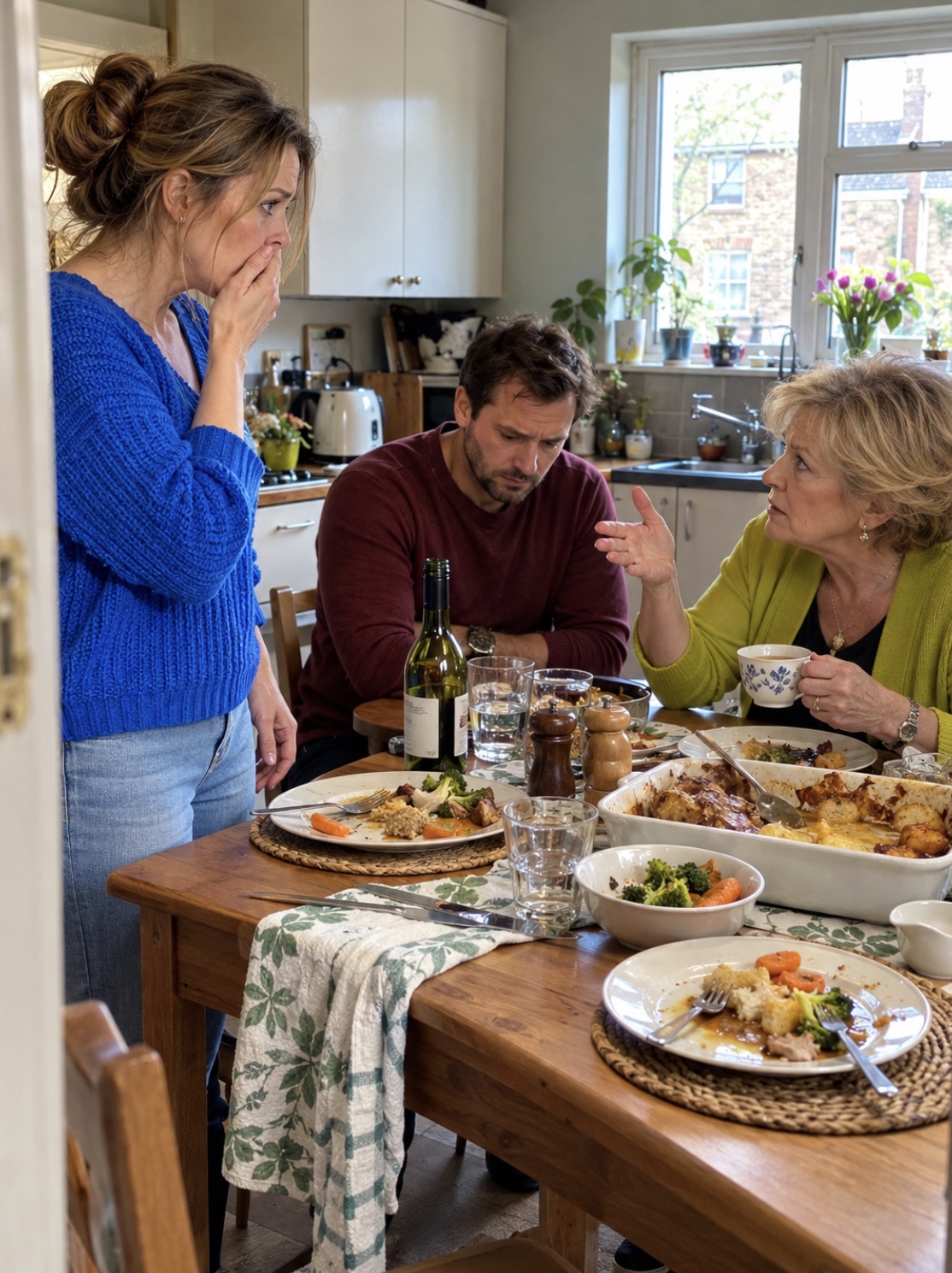
She was sitting at my kitchen table in a pale green cardigan, calmly stirring sugar into her tea as if she were asking me to pass the salt.
“Emily needs security,” she said. “You already have yours.”
I looked at my husband.
Daniel suddenly became very interested in the label on his beer bottle.
That was the moment I understood this conversation had started long before I entered the room.
We live in Bristol, in a two-bedroom flat on the second floor of a converted Victorian house. Nothing luxurious. High ceilings, creaky floorboards, narrow stairs, and a kitchen window that looks directly onto three wheelie bins and the neighbour’s washing line.
But the flat is ours.
Or, more accurately, it was mine before I married Daniel.
I bought it when I was thirty-one, after nearly nine years of renting rooms, sharing houses with strangers and saving every spare pound I could. I had help with neither the deposit nor the mortgage. My parents weren’t wealthy, and my dad died when I was twenty-seven. The only money I inherited was £3,800 from a small life-insurance policy, most of which went towards clearing a student overdraft and replacing my ancient car.
The deposit came from me.
The mortgage was in my name.
When Daniel moved in three years later, he knew all of that.
We married two years after that.
His mother, Margaret, had always referred to the flat as “your little place” when speaking to me.
When talking to other people, however, it somehow became “Daniel and Rachel’s property.”
I had noticed the difference.
I just hadn’t realised how important it would become.
Emily was Daniel’s younger sister, thirty-two, recently separated from her boyfriend, Callum. They had lived together for almost six years in a rented house outside Bath.
The breakup had been messy.
Callum kept the dog.
Emily kept most of the furniture.
And Margaret kept announcing to anyone who would listen that her daughter had been “left with absolutely nothing.”
That wasn’t completely true.
Emily had a full-time job in HR for a large logistics company. She earned a decent salary. She had about £14,000 in savings, according to Daniel.
But she couldn’t afford to buy what she wanted.
And that distinction became very important in Margaret’s mind.
“I’m not sure I understand what you’re suggesting,” I said.
Margaret took a sip of tea.
“I think you do.”
“No, I genuinely don’t.”
She sighed.
“Your flat has increased substantially in value.”
I looked at Daniel again.
Still studying the beer label.
Margaret continued.
“You bought it for, what, two hundred and something?”
“Two hundred and twenty-eight thousand.”
“And now it’s worth at least three hundred and fifty.”
“Probably.”
“Exactly.”
She smiled as if we had just solved a pleasant little maths problem together.
“So there’s plenty of equity.”
I put down my fork.
We had invited her for Sunday lunch.
Roast chicken, potatoes, carrots, Yorkshire puddings because Daniel liked them even though they made no geographical sense whatsoever with anything we cooked.
I suddenly wasn’t hungry.
“What does my equity have to do with Emily?”
Margaret looked genuinely surprised.
“Well, family helps family.”
Daniel finally spoke.
“Mum…”
But she waved him away.
“She can’t get onto the property ladder, Rachel. Not properly. She’s thirty-two. Prices are ridiculous.”
“I’m aware.”
“She found a flat in Keynsham.”
“I know.”
“She loves it.”
“I know that too.”
“Then you know she’s short.”
“How short?”
Margaret glanced at Daniel.
He answered quietly.
“About forty-five grand.”
I actually laughed.
Not because it was funny.
Because sometimes your body chooses a reaction before your brain catches up.
“Forty-five thousand pounds?”
Margaret frowned.
“You don’t need to say it like that.”
“How should I say it?”
“She doesn’t need all of it from you.”
That sentence made my stomach tighten.
“From me?”
“From both of you.”
“Daniel doesn’t own this flat.”
Silence.
There it was.
The thing everyone at the table had apparently agreed not to say.
Margaret’s face changed.
Only slightly.
But enough.
“We thought,” Daniel began, “there might be another way.”
“We?”
He rubbed his forehead.
“Rachel, please.”
“No. Who is ‘we’?”
Margaret leaned forward.
“If Emily had a share in this flat, the bank would see that she had an asset.”
I stared at her.
“A share?”
“Twenty-five percent might be enough. Perhaps thirty. Half would obviously give her more options.”
For several seconds, I honestly thought I had misunderstood.
Then I realised she was suggesting exactly what it sounded like.
She wanted me to transfer ownership of part of my home to her daughter.
Not lend her money.
Not act as guarantor.
Not help with a deposit.
Give her a legal share of the flat I had spent years paying for.
And she was discussing percentages as casually as slices of cake.
📌 What happened next changed the entire conversation — keep reading below. 👇
I turned to Daniel.
“Did you know she was going to ask me this?”
He didn’t answer quickly enough.
That was answer enough.
“How long?”
“It wasn’t like that.”
“How long, Daniel?”
“Since Thursday.”
It was Sunday.
Three days.
For three days, my husband had known his mother planned to sit in my kitchen and ask me to sign away part of my home.
“And what did you tell her?”
“I said we’d discuss it.”
“No. What did you tell her before she came here?”
He looked uncomfortable.
“I said I didn’t think you’d go for half.”
I felt something inside me go very still.
Not angry.
Not yet.
Just still.
Margaret mistook my silence for hesitation.
“Rachel, nobody is trying to take anything away from you. You’d still live here.”
I looked at her.
“That may be the strangest reassurance anyone has ever given me.”
She stiffened.
“You know what I mean.”
“I don’t think you know what you mean.”
Daniel said my name quietly.
I ignored him.
“If I give Emily fifty percent ownership, she owns fifty percent. That is taking something away from me.”
“It would stay in the family.”
“My family?”
Margaret blinked.
“Well, obviously.”
“No, Margaret. Your family.”
Daniel pushed his chair back slightly.
“Okay. This is getting hostile.”
I looked at him.
“Your mother just asked me for roughly £175,000 worth of property and I’m being hostile?”
“That isn’t fair.”
“What part?”
“No one is asking you for cash.”
I almost admired the sentence.
It was such a spectacular attempt to make something sound reasonable by describing it incorrectly.
Margaret stood up.
“I knew you’d make this ugly.”
“You asked me to give your daughter half my flat.”
“My daughter needs it more!”
Her voice rose for the first time.
That sentence stayed with me.
Not because it was cruel.
Because she believed it.
She genuinely believed need created entitlement.
Emily needed a property.
I already had one.
Therefore, some of mine should become hers.
After Margaret left, Daniel and I had the worst argument of our marriage.
Not dramatic.
No plates smashed.
No doors slammed.
That would have been easier.
Instead, we stood in the kitchen speaking in low voices because our downstairs neighbour had a baby.
Daniel said he had never agreed to half.
I said the percentage wasn’t the problem.
He said his mum was desperate.
I said his mother wasn’t the one buying a flat.
He said Emily had been through a horrible year.
I said I was sorry for her.
Then I asked a question that changed his expression completely.
“How much have you already promised her?”
He froze.
It was tiny.
Maybe half a second.
But I saw it.
“Nothing.”
“You’re lying.”
“I’m not.”
“Daniel.”
“I haven’t promised her your flat.”
Interesting wording.
Not “I haven’t promised her anything.”
Your flat.
I walked into the living room and picked up his iPad from the coffee table.
He followed me immediately.
“What are you doing?”
“I want to see the family WhatsApp chat.”
“That’s private.”
“So is my property.”
“Rachel.”
“Show me.”
He hesitated.
Then unlocked it.
The family group was called Morgan Clan, complete with a ridiculous little Welsh dragon emoji despite the fact none of them were Welsh.
I searched Emily’s name.
Most messages were ordinary.
Birthday plans.
Photos of Margaret’s garden.
Daniel’s dad, Peter, complaining about roadworks.
Then I found a message from twelve days earlier.
Margaret:
If Rachel agrees to add you to the title deeds, you may not need Mum and Dad’s savings at all.
Emily:
Would she actually do that?
Daniel:
I don’t know. I’ll speak to her.
Then another message.
Emily:
Even 25% would change everything with the mortgage adviser.
Margaret:
Daniel has rights too. They’re married.
Daniel:
Mum, it isn’t that simple.
Margaret:
It should be.
I read the conversation twice.
Then I saw something stranger.
A message from Emily:
I still don’t like doing this without telling Rachel the whole reason.
Daniel had replied:
Please leave that to me.
I looked up.
“What whole reason?”
His face drained.
And suddenly the flat itself no longer felt like the biggest issue in the room.
“What whole reason, Daniel?”
He sat down.
“Emily’s flat isn’t for Emily.”
For a moment, I thought I had misheard him.
“What?”
“The place in Keynsham.”
“Yes.”
“She isn’t planning to live there.”
I stared at him.
“Then who is?”
He covered his face with both hands.
“Our parents.”
That made even less sense.
Margaret and Peter owned a three-bedroom semi-detached house in Somerset.
They had lived there for almost thirty years.
Mortgage paid off.
At least, that was what I had always been told.
“What happened to their house?”
Daniel looked at the floor.
“They’re selling it.”
“Why?”
He didn’t answer.
I felt my pulse quicken.
“Daniel.”
“Mum borrowed against it.”
“When?”
“Over the last several years.”
“How much?”
“I don’t know exactly.”
“You do.”
He exhaled.
“About a hundred and ten thousand.”
I sat down.
Margaret had remortgaged their house three times.
The first time was supposedly for renovations.
The second was to help Emily and Callum with debts they had accumulated during Covid.
The third was the disaster.
Margaret had invested money in a friend’s catering business.
The business failed.
Her friend declared bankruptcy.
Margaret had never told Peter the full amount she had put in.
By the time he discovered what had happened, their monthly payments had become difficult to manage on his pension and Margaret’s part-time wages.
They had decided to sell.
After clearing the mortgage and fees, Daniel estimated they would have around £170,000 left.
Enough to buy something small in some areas.
But Margaret didn’t want something small.
She also refused to move far away.
So the plan had evolved.
Emily would buy the Keynsham flat using her salary and savings.
Margaret and Peter would contribute most of what remained from selling their house.
They would live there.
Emily would technically own it.
And one day it would become hers completely.
“But the lender wasn’t happy with the arrangement,” Daniel said.
“Because Emily wouldn’t be living there?”
“Partly.”
“So they decided she needed another asset.”
Daniel nodded.
“And your mother chose mine.”
He said nothing.
I looked back at the family group.
“Does Emily know everything?”
“Yes.”
“And Peter?”
Another hesitation.
“He knows they’re selling.”
“That isn’t what I asked.”
Daniel closed his eyes.
“No.”
I stood up.
His father didn’t know.
Peter believed they were downsizing because Margaret wanted an easier house to maintain.
He didn’t know their daughter was planning to buy the replacement property in her own name.
He didn’t know his wife was trying to use my flat to strengthen Emily’s finances.
And, crucially, he didn’t know how much money from the eventual sale was supposed to go directly to Emily.
I didn’t sleep much that night.
The next morning, I called a solicitor.
Not because I thought Margaret could somehow steal my flat.
She couldn’t.
But I wanted absolute clarity about my position.
The solicitor confirmed what I already suspected: transferring even a small share could create complicated legal, tax and mortgage consequences. It could also become extremely messy if Emily later had financial problems, married, divorced or died.
The answer was simple.
Don’t do it.
I wasn’t planning to.
But that wasn’t enough anymore.
The real problem was Peter.
Three days later, Daniel finally agreed we needed to tell him.
Margaret found out first.
She arrived at our flat at seven-thirty that evening without warning.
I opened the door and she walked straight past me.
“You called a solicitor?”
Daniel had apparently mentioned it.
“Yes.”
“You actually involved a solicitor?”
“You asked me to alter legal ownership of my home. Who did you think I’d call? A florist?”
Her mouth tightened.
“You’re trying to humiliate me.”
“No. I’m trying to understand why your husband doesn’t know what you’re doing with the proceeds of his own house.”
Everything changed.
Margaret looked at Daniel.
He looked away.
“You told her?”
“She already knew something was wrong.”
“That was private.”
“So was my flat.”
She pointed at me.
“This is exactly why I didn’t want outsiders involved.”
I laughed once.
“Outsider?”
“You know what I mean.”
“I’m married to your son.”
“That doesn’t give you the right to interfere in my marriage.”
“But marriage apparently gives Daniel rights over property I bought before meeting him?”
She had no answer.
The next evening, Peter came over.
Margaret refused to come.
He sat in the same chair she had occupied four days earlier.
I had expected anger.
Instead, he looked tired.
Daniel explained everything.
Not just the proposed flat transfer.
The messages.
Emily’s mortgage application.
The intended ownership arrangement.
The amount Margaret wanted to put into the purchase.
Peter listened silently.
When Daniel finished, he asked one question.
“Whose name would the Keynsham flat be in?”
“Emily’s.”
“Only Emily’s?”
“Yes.”
Peter stared at the table for a long time.
Then he said something neither of us expected.
“I knew.”
Daniel looked stunned.
“You knew?”
“Not all of it.”
Peter had discovered the investment losses six months earlier.
He had also discovered something Margaret hadn’t told Daniel or Emily.
There was no need to sell the house immediately.
Peter had spoken privately with their bank.
He had enough money in a pension drawdown account to reduce the mortgage substantially. Combined with cutting some expenses, they could stay in the house.
He hadn’t told Margaret because he wanted to understand why she was so determined to sell.
Now he understood.
“It isn’t about us needing somewhere to live,” he said.
“It’s about Emily.”
Daniel frowned.
“What do you mean?”
Peter gave a bitter little smile.
“Your mother has been trying to leave that house to your sister without saying she’s leaving it to your sister.”
The room went quiet.
Margaret had worried for years that when she and Peter died, their estate would be divided equally between Daniel and Emily.
She thought that was unfair.
Daniel had married me.
I owned property.
Emily didn’t.
In Margaret’s mind, equality meant correcting that imbalance.
If their existing house was sold and most of the equity became Emily’s deposit on a flat held solely in Emily’s name, the transfer would happen while Margaret and Peter were alive.
No argument over wills.
No equal inheritance.
No difficult conversation.
Emily would simply end up with the asset.
And when the lender became cautious about the arrangement, Margaret had looked at my flat and seen another possible tool.
“My daughter needs it more,” suddenly meant something completely different.
She wasn’t talking about one bad breakup.
She had been reorganising the family’s future according to who she believed deserved what.
Peter went home that night.
Two weeks later, he cancelled the estate agent.
The Somerset house never went on the market.
He used part of his pension money to reduce the outstanding mortgage, then insisted he and Margaret attend financial counselling before making any other major decision.
Emily lost the Keynsham flat.
For a while, she blamed me.
Then, unexpectedly, she asked to meet me for coffee.
I nearly said no.
But curiosity won.
We met at a café near Temple Meads.
She looked exhausted.
“I owe you an apology.”
I waited.
She wrapped both hands around her mug.
“Mum made it sound different.”
“How?”
“She said Daniel had paid towards your mortgage for years, so he already owned part of the flat morally, even if his name wasn’t on it.”
“He contributes to household bills.”
“I know that now.”
She looked embarrassed.
“She also told me you’d probably inherited the deposit.”
I almost smiled.
“From whom?”
“I don’t know. Your dad, I suppose.”
“My dad left me less than four thousand pounds.”
Emily looked down.
“I didn’t know.”
For the first time, I realised Margaret hadn’t only manipulated Daniel.
She had built different versions of the same story for each of us.
To Emily, I was the comfortable woman sitting on unearned property.
To Daniel, Emily was the vulnerable sister who needed temporary help.
To Peter, selling the house was sensible downsizing.
And to me, the whole arrangement was supposedly just a generous family gesture.
Each version was almost believable.
None of them was true.
Emily eventually bought a small one-bedroom flat eighteen months later.
With her own deposit.
Her own mortgage.
Her own name on the deeds.
Peter helped her with £5,000.
He gave Daniel the same amount.
Daniel tried to give his to me as some kind of symbolic compensation.
I told him to put it into savings.
Our marriage survived, but not because I forgot what happened.
It survived because Daniel stopped defending his silence.
For months, every difficult conversation came back to that Sunday lunch.
Not to what Margaret had asked.
To the fact that he had let her ask it while pretending he wasn’t involved.
He eventually admitted something I think mattered more than any apology.
“I knew it was unreasonable,” he told me one evening. “I just hoped you’d be the one to say no so I wouldn’t have to.”
That was the truth.
And strangely, once he finally said it, we had something real to work with.
Margaret didn’t speak to me for nearly seven months.
At Christmas, she sent Daniel a message saying she didn’t feel “welcome” in our home.
He replied:
You are welcome. Discussions about Rachel’s property are not.
She came for Boxing Day.
She brought a trifle.
We discussed the weather, Peter’s new glasses, Emily’s job and the neighbour’s cat.
Nobody mentioned property.
Just before she left, Margaret stood in our hallway and looked around the flat.
For a second, I wondered whether she was calculating percentages again.
Then she said quietly, “You worked hard for this place, didn’t you?”
It wasn’t exactly an apology.
But it was closer than I expected.
“Yes,” I said. “I did.”
She nodded.
Then she put on her coat and left.
I locked the door behind her.
Not because I was frightened she would come back.
Because for the first time since that Sunday lunch, the sound of the lock turning reminded me of something simple.
A home can be shared.
A family can be generous.
People can help each other.
But generosity stops being generosity the moment someone else decides what you should be willing to give.