



The first time I heard that my husband was buying a car was when his mother asked me which colour I preferred.
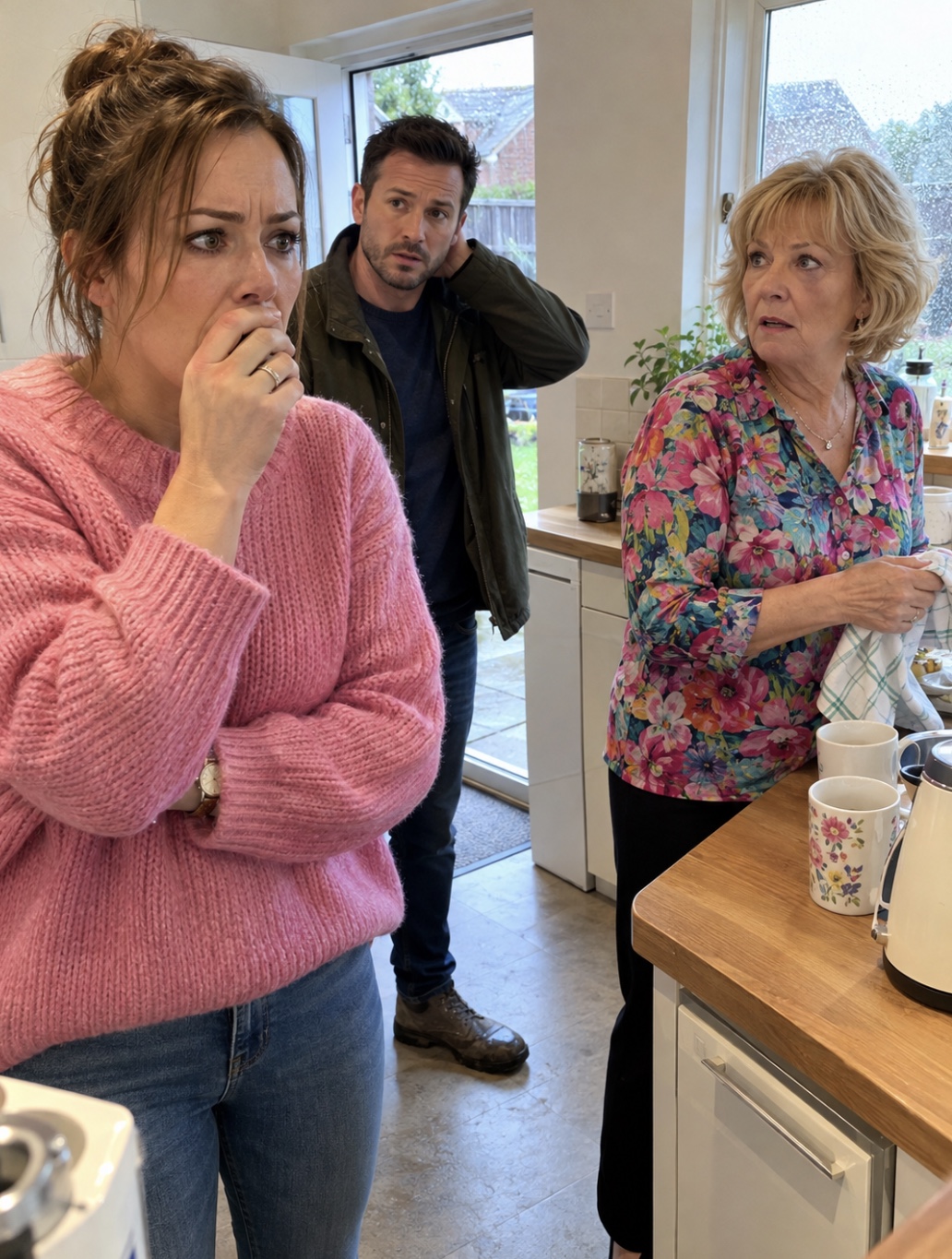
We were standing in her kitchen in Reading on a wet Sunday afternoon. Patricia had just taken a shepherd’s pie out of the oven, and my husband, Daniel, was in the back garden trying to stop her shed door from banging in the wind.
“Silver is probably more sensible,” she said, wiping her hands on a tea towel. “Black shows every mark.”
I thought she was talking about her neighbour’s new Audi.
“For what?” I asked.
She looked at me as though I’d missed something obvious.
“The car.”
“What car?”
There was a pause.
Not a long one. Maybe two seconds.
But it was long enough for Patricia’s face to change.
“Oh,” she said. “I thought Daniel had told you.”
My stomach tightened.
“Told me what?”
She turned towards the kettle.
“Well, we’ve decided it makes more sense to register it in my name.”
I stared at the back of her grey-blonde head.
“Register what in your name?”
She opened the cupboard, took out three mugs and suddenly became extremely interested in arranging them.
“The new car.”
Daniel came through the back door at exactly that moment, shaking rain from his sleeves.
Patricia looked at him.
I looked at him.
He stopped.
“What?” he said.
“Your mum says you’re buying a car.”
His expression answered before he did.
“It’s not exactly like that.”
There are few sentences in marriage more dangerous than “It’s not exactly like that.”
I folded my arms.
“What is it exactly like, then?”
Daniel glanced at his mother.
That annoyed me more than anything.
Not because I believed they were having some grand conspiracy behind my back. At that point I still assumed there was a reasonable explanation.
But a married man should not have to check his mother’s face before explaining a major purchase to his wife.
Patricia stepped in quickly.
“It’s nothing dramatic, Emma. Daniel’s old Focus is on its last legs.”
“It passed its MOT three weeks ago.”
“Yes, but how long for?”
“A year, usually.”
Daniel gave me the look he used when he thought I was being deliberately difficult.
“It needs work.”
“What work?”
“Clutch eventually. Suspension. A few things.”
“According to whom?”
“The garage.”
“Which garage?”
He exhaled.
“Emma.”
“No. Don’t ‘Emma’ me. What car are you buying?”
Patricia poured boiling water into the mugs.
“A Volvo.”
I turned back to Daniel.
“A Volvo?”
“A used one.”
“How much?”
Another pause.
“Twenty-four.”
I actually laughed.
Not because it was funny.
“Twenty-four hundred?”
Daniel rubbed the back of his neck.
“Twenty-four thousand.”
The kitchen seemed to shrink around me.
For context, we were not wealthy people.
Daniel was thirty-eight and worked as a project supervisor for a commercial flooring company. I was thirty-six and worked four days a week in HR for a logistics firm near Slough.
We had a seven-year-old daughter, Sophie, a mortgage on a three-bedroom semi, childcare costs during school holidays and a kitchen roof that had developed a damp patch every time it rained sideways.
Two months earlier Daniel and I had agreed to postpone replacing our boiler until after Christmas because we wanted to rebuild our emergency savings.
And now, apparently, he was buying a £24,000 Volvo.
“How?” I asked.
Daniel leaned against the counter.
“Finance.”
I felt my jaw tighten.
“You applied for car finance without speaking to me?”
“I haven’t signed anything.”
Patricia corrected him.
“Not yet.”
I looked from one to the other.
“And why exactly would it be in your mother’s name?”
Daniel answered too quickly.
“Better rate.”
That was the first lie.
I didn’t know it was a lie yet, but something about the way he said it was too polished, too ready.
Patricia had apparently found the car through someone at her bowls club whose son worked for a dealership outside Basingstoke. Low mileage. One previous owner. Full service history. Excellent condition.
Daniel started giving me specifications as if enough technical detail might make me forget that he’d hidden the entire thing.
I barely listened.
I heard fragments.
Automatic.
Hybrid.
Warranty.
Deposit.
Then one word caught me.
“Deposit?”
Daniel stopped.
“What deposit?”
He frowned.
“I said there would be one.”
“How much?”
Patricia opened the fridge.
“Only four.”
“Four thousand?”
Neither of them answered immediately.
I felt my palms go cold.
“Where is four thousand pounds coming from?”
Daniel looked at me.
“My savings.”
That was when I knew something was badly wrong.
Daniel didn’t have £4,000 in personal savings.
Not unless he had been saving secretly.
We had separate current accounts for everyday spending and a joint account for mortgage, bills and household costs. We also each transferred money into a joint savings account.
Daniel had complained three weeks earlier that replacing two tyres had wiped out most of his spare cash.
I stared at him.
“What savings?”
He glanced at Patricia again.
That glance changed the conversation.
“Daniel,” I said quietly, “what savings?”
📌 Keep reading — the reason behind the car was nothing like I expected, and it started with one bank transfer.
Patricia finally sat down at the kitchen table.
“Perhaps you two should talk at home.”
“No,” I said. “We’re talking now.”
Daniel pushed away from the counter.
“Fine. Mum is helping with the deposit.”
Patricia looked irritated.
“I’m not helping. I’m paying it.”
I turned towards her.
“Why?”
“Because I can.”
“That isn’t what I asked.”
She frowned.
“Honestly, Emma, you make everything sound suspicious.”
“I found out thirty seconds ago that my husband is arranging a £24,000 car in your name with a £4,000 deposit from you. Suspicious arrived before I did.”
Daniel stepped between us.
“Can we not turn this into a fight?”
I looked at him.
“Then tell me the truth.”
He did not.
Not that afternoon.
On the drive home, Sophie sat in the back wearing headphones and watching a cartoon on her tablet while rain blurred the motorway lights.
Daniel drove with both hands fixed on the wheel.
I waited until we were halfway down the M4.
“Is there debt?”
He glanced at me.
“What?”
“Credit cards? Loans? Anything I don’t know about?”
“No.”
“Then why can’t the car be financed in your name?”
“It can.”
“So why isn’t it?”
“My mum gets a better rate.”
“She’s retired.”
“She has a good credit history.”
“So do you.”
Silence.
That silence lasted all the way to Junction 11.
When we got home, I put Sophie to bed while Daniel disappeared downstairs.
I found him sitting at the dining table with his laptop open.
“I don’t want to argue,” he said.
“Good.”
I sat opposite him.
“Show me.”
“Show you what?”
“Your credit report.”
He looked offended.
That made me certain.
“Emma, seriously?”
“Yes.”
“You don’t trust me?”
“Not tonight.”
For nearly a minute neither of us spoke.
Then he shut the laptop.
“That’s ridiculous.”
I stood up.
“No, ridiculous is discovering your husband’s new car from his mother.”
He followed me into the kitchen.
“You’re blowing this out of proportion.”
“Then prove it.”
He wouldn’t.
I slept badly.
The next morning Daniel left early for work.
At 8:17, after dropping Sophie at school, I opened our joint banking app.
Nothing looked unusual.
Mortgage.
Council tax.
Energy.
Groceries.
Savings transfers.
Then I checked the savings account.
Our balance should have been just over £11,000.
It was £7,150.
I stared at the screen.
There had been a withdrawal six weeks earlier.
£3,800.
The description was simply:
TRANSFER TO D. HARRIS.
Daniel.
I called him immediately.
He didn’t answer.
I called again.
Nothing.
At 8:26 I sent him a screenshot.
At 8:31 he replied.
I can explain.
I typed:
Come home.
His next message came almost instantly.
Can’t. Site meeting.
Then call me.
He called five minutes later.
I didn’t say hello.
“You took £3,800 from our emergency savings.”
“I was putting it back.”
“For what?”
“It wasn’t for the car.”
That frightened me more.
“Then what was it for?”
He went quiet.
In the background I could hear reversing beeps from machinery.
“Dan?”
“I lent Mum some money.”
I sat down on the edge of our bed.
“You lent your mother nearly four thousand pounds and didn’t tell me?”
“She needed it quickly.”
“For what?”
“A tax bill.”
Patricia had worked for thirty years as a secondary school administrator and had been retired for four.
“What tax bill?”
“I don’t know all the details.”
I closed my eyes.
“Did she pay it back?”
“She will.”
“When?”
“Emma—”
“When?”
“She’s paying the deposit on the car.”
For several seconds I didn’t understand.
Then I did.
“You gave her £3,800 from our savings. Now she’s giving you £4,000 for the car.”
“It’s basically returning it.”
“No, Daniel. It isn’t. Why move our money through your mother?”
He said nothing.
That was the second lie collapsing.
I spoke slowly.
“Why does the money have to look like it came from her?”
He ended the call.
Not dramatically. No shouting.
He simply said, “I have to go,” and disconnected.
That evening I did something I had never done in eleven years with Daniel.
I searched his office.
Not drawers, not pockets, not private messages.
I opened the folder where we kept financial paperwork.
Mortgage statements.
Insurance.
Pension documents.
Old payslips.
At the back was an envelope from a bank I didn’t recognise.
It was addressed to Daniel.
I nearly put it back.
Instead I opened it.
Inside was a formal notice about a personal loan.
Balance outstanding: £17,460.
My hands started shaking.
The loan had been taken out eighteen months earlier.
£20,000.
Monthly payment: £431.
I read every page twice.
I had never seen £431 leaving our accounts.
Which meant he was paying it from somewhere else.
When Daniel came home at seven, I placed the letter on the kitchen table.
He stopped in the doorway.
His face drained.
Sophie was upstairs.
I said quietly, “Sit down.”
He didn’t.
“Where did £20,000 go?”
Daniel looked at the letter.
Then he sat.
For a long time, he said nothing.
When he finally spoke, his voice sounded completely different.
Tired.
“I bought into Marcus’s business.”
Marcus was Daniel’s cousin.
Three years younger, endlessly enthusiastic, permanently “about to make something work.”
Over the years he had started a mobile valeting service, an online furniture business, a garden office company and, most recently, a courier business.
“You invested twenty thousand pounds in Marcus?”
“Not exactly.”
Of course.
Not exactly.
“What exactly?”
“He needed vans.”
“You borrowed £20,000?”
“Eighteen went to the business.”
“And the other two?”
“Fees. Insurance. Stuff.”
I stared at him.
“Why?”
“He said I’d get it back within a year.”
“Did your mother know?”
Daniel’s eyes dropped.
There it was.
“Yes.”
That was why he kept looking at her.
Patricia had known from the beginning.
“How much have you got back?”
He rubbed both hands over his face.
“Three thousand.”
My chest tightened.
“The business failed?”
“Not completely.”
“Daniel.”
“Yes.”
Marcus’s company had collapsed nine months earlier.
Daniel had hidden it.
Since then, he had been paying £431 a month from overtime, mileage reimbursements and occasional money Patricia transferred to him.
Then his overtime had been cut.
Two months earlier he had missed a payment.
Then another.
His credit score had dropped.
Not catastrophically, but enough that the dealership finance quote had become far more expensive than expected.
“So the Volvo goes in Patricia’s name,” I said.
He nodded.
“She gets the finance. I pay her.”
“And the £3,800?”
“Mum needed to clear a credit card before applying.”
I stared at him.
The tax bill had never existed.
“You took our savings to improve your mother’s finances so she could borrow money for you.”
“When you say it like that—”
“How else would anyone say it?”
He flinched.
I stood and walked to the window because I suddenly couldn’t sit near him.
Then something occurred to me.
“Why do you need another car at all?”
Daniel didn’t answer.
I turned.
“Your Focus is fine.”
He looked exhausted now.
“It’s for work.”
“You have a company mileage allowance.”
“No.”
One word.
Quietly spoken.
And suddenly I understood there was still something else.
“What happened?”
His company was restructuring.
Daniel had known for six weeks.
From November, his role would cover sites across Berkshire, Oxfordshire and Hampshire. The company was removing pool vehicles for supervisors but increasing mileage reimbursement.
Daniel believed his old Focus would become unreliable with the extra travel.
That part, at least, made sense.
What did not make sense was everything surrounding it.
“Why not tell me?”
He looked at me for the first time in several minutes.
“Because every piece of it made me look worse.”
That answer hurt more than another lie would have.
Not because it was cruel.
Because it was honest.
He had hidden the investment because he wanted to seem clever.
He hid the failure because he felt stupid.
He hid the loan because he felt ashamed.
He hid the missed payments because he was afraid I would discover everything else.
And then his mother helped him hide one problem by creating another.
The next morning Patricia arrived at our house before nine.
Daniel had clearly called her.
She walked into the kitchen carrying her handbag like she was attending a meeting.
“I think things have got unnecessarily heated,” she began.
I almost laughed.
“Did you know about Marcus?”
“Yes.”
“The loan?”
“Yes.”
“The missed payments?”
Her confidence weakened.
“Eventually.”
“And you helped Daniel hide it from me.”
“I helped my son.”
“You helped a married man conceal £20,000 of debt from his wife.”
She looked offended by the wording.
“It wasn’t your debt.”
I stared at her.
“We have a mortgage together. A child together. Savings together. If Daniel loses his income or can’t meet repayments, whose problem do you think it becomes?”
She crossed her arms.
“He made a mistake.”
“Yes.”
“And families help each other.”
“Yes.”
“So I helped.”
“No, Patricia. You helped him avoid telling the truth.”
The room went quiet.
Daniel was standing by the door.
I asked Patricia one final question.
“Whose idea was the Volvo?”
She looked at him.
That was enough.
Hers.
She believed Daniel needed something “reliable and presentable” for work. Her neighbour’s son had found the Volvo. Patricia had suggested financing it herself because Daniel’s credit would make the deal expensive.
Then came the part neither of them had told me.
The car would not legally belong to Daniel.
It would belong to Patricia.
Daniel would make the monthly payments.
The insurance would list him as the main driver.
But the vehicle, contract and registration would all be in her name.
“What happens if you two argue?” I asked.
Patricia blinked.
“We don’t.”
“What happens if you die?”
Her expression changed.
Daniel said, “Emma.”
“No. Seriously. What happens? Does the car become part of her estate while Daniel keeps paying for it?”
Neither of them knew.
That afternoon I called the dealership myself.
I didn’t cancel anything because nothing had yet been signed.
But I asked enough questions to understand how badly thought through the arrangement was.
Then I booked an appointment with an independent financial adviser.
Daniel didn’t want to go.
I told him I was going whether he came or not.
He came.
The solution turned out to be less dramatic than the problem.
And far less glamorous than a Volvo.
We kept the Focus.
A mechanic we trusted estimated that even replacing the clutch and several suspension components over the next year would cost far less than taking on another finance agreement.
We rebuilt our emergency fund gradually.
Daniel sold an expensive road bike, cancelled two subscriptions and redirected his work mileage payments towards the loan.
Marcus signed a written repayment agreement after Daniel finally confronted him. The amount Marcus could afford was small, but at least it existed on paper.
Patricia transferred back £3,800 within a week.
I expected that to be the end of it.
It wasn’t.
A month later she arrived with an envelope.
Inside was a cheque for £4,000.
“I sold some premium bonds,” she said.
I pushed it back.
“No.”
“It’s not for a car.”
“I know.”
“I want to replace what Daniel lost.”
“That wasn’t your investment.”
“He’s my son.”
“And he needs to live with the consequences of his decisions.”
She looked down at the envelope.
For once she didn’t argue.
Then she said something I didn’t expect.
“When he was little, if he forgot his homework, I drove it to school. If he overspent at university, I sent money. When he got that parking fine in Bristol, I paid it before his father knew.”
She gave a small, embarrassed smile.
“I suppose I got very good at rescuing him.”
I looked towards the hallway, where Daniel was helping Sophie find one missing school shoe.
“And he got very good at being rescued.”
Patricia nodded.
That was the closest we ever came to an apology.
Six months later, Daniel still drove the blue Focus.
It had a new clutch, two new front tyres and a dent in the passenger door from a supermarket trolley.
Every month, on the first Sunday, we sat down after Sophie went to bed and opened everything.
Joint account.
Savings.
Credit cards.
Loan balance.
No hidden folders.
No vague answers.
No “I’ll explain later.”
Marcus was repaying £150 a month.
Slowly.
Painfully.
Honestly.
One evening Daniel came home and placed a sheet of paper on the kitchen counter.
It was a savings projection.
“If we keep the Focus another eighteen months,” he said, “we could probably buy the next car mostly in cash.”
I looked at him.
“What car?”
He smiled carefully.
“I thought maybe this time we could decide together.”
That sentence meant more to me than any apology he had given.
Eighteen months earlier, I would have thought trust disappeared in one dramatic moment.
It didn’t.
Ours went missing in small amounts.
A secret loan.
A hidden transfer.
A mother asked to fix things quietly.
A husband too embarrassed to admit he had made a terrible decision.
And repairing it happened the same way.
One statement.
One conversation.
One uncomfortable truth at a time.
As for Patricia, she never again offered to put a car in her name.
But the following Christmas she gave Daniel a small wrapped box.
Inside was a toy silver Volvo.
A note was taped underneath.
It read:
“Save first.”
Even I laughed.